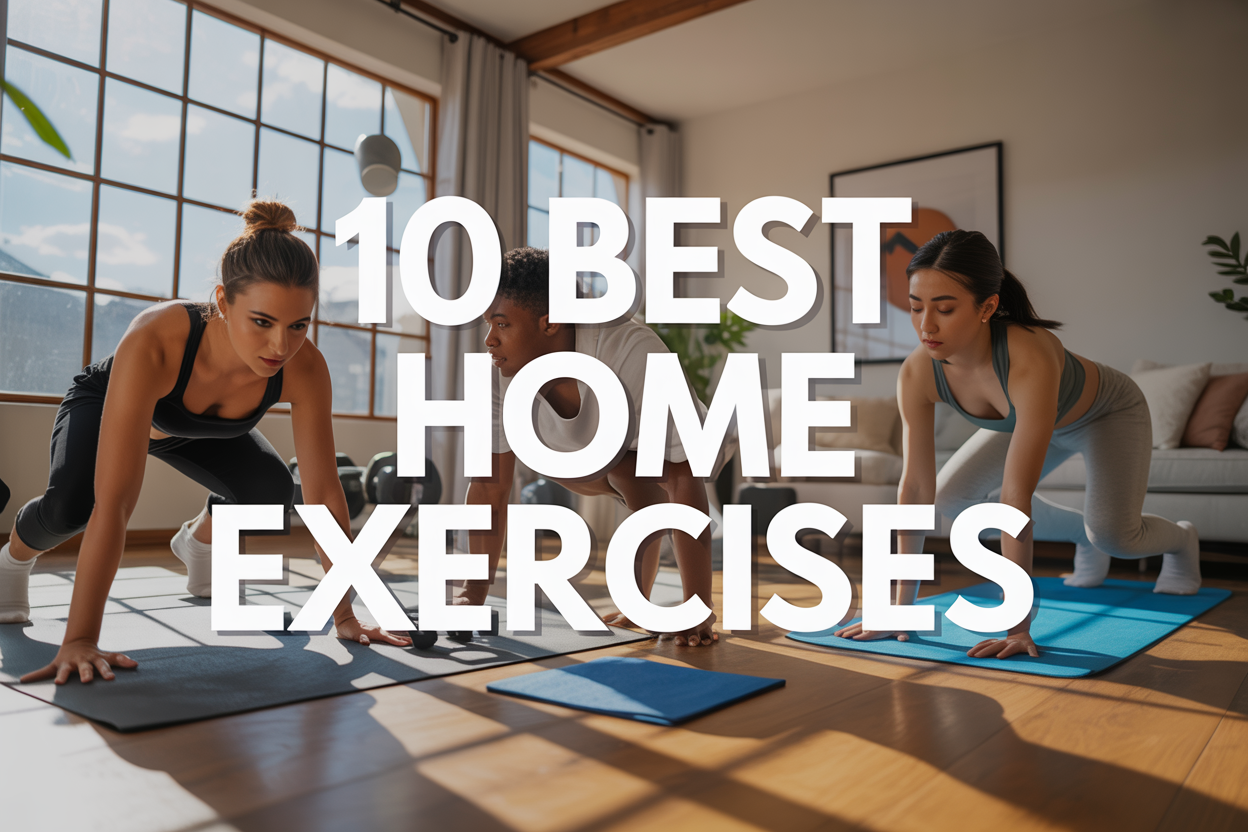
Getting fit doesn't require a gym membership or expensive equipment. These 10 best home exercises work for busy professionals, parents with limited time, and anyone wanting to build strength without leaving their house.
Home workouts can target every muscle group and fitness goal. You'll discover upper body strength builders that sculpt your arms and shoulders using just your body weight. We'll also cover core strengthening essentials that create a solid foundation for all your daily activities. Plus, you'll learn equipment-free modifications so you can adapt any exercise to your current fitness level and available space.
Upper Body Strength Builders

Push-ups for chest and arm development
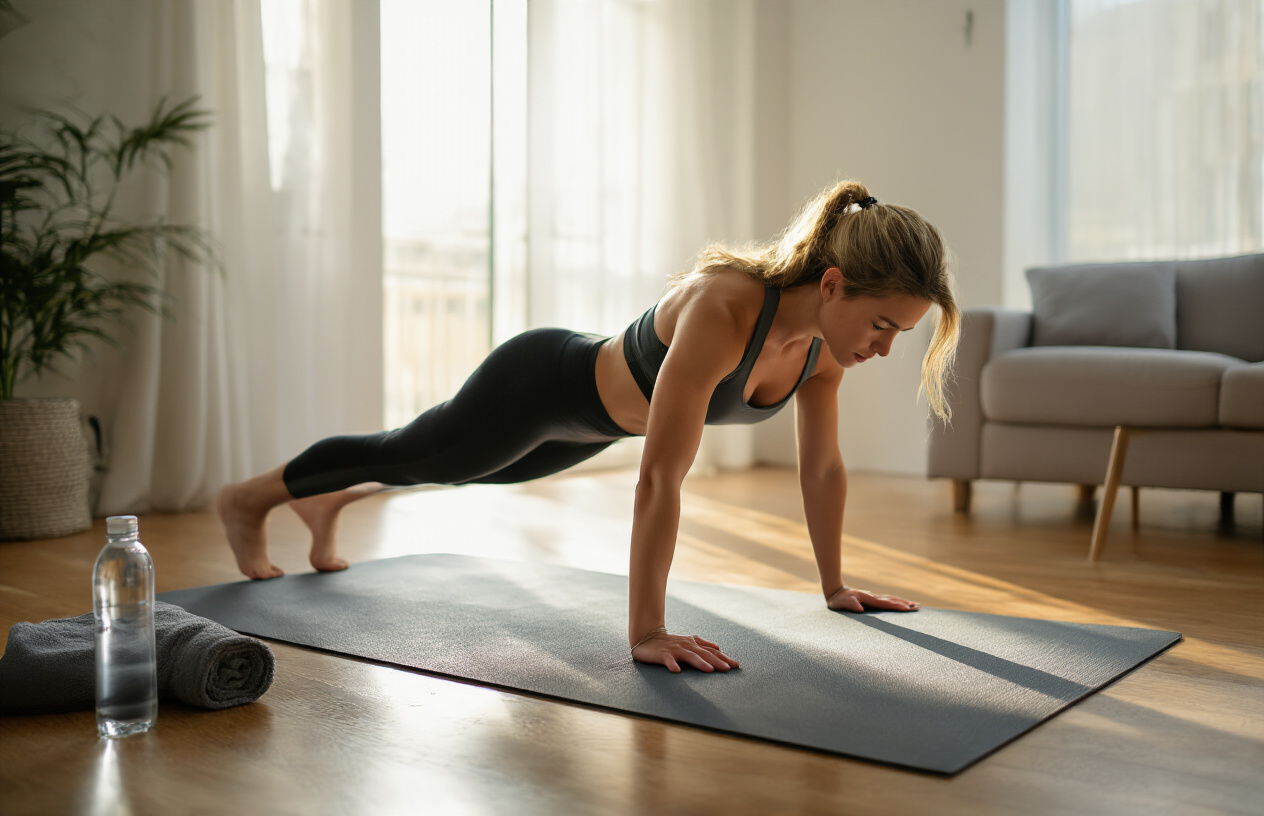
The classic push-up remains the gold standard for building upper body strength at home. Start in a plank position with your hands placed slightly wider than shoulder-width apart. Keep your body in a straight line from head to heels as you lower yourself until your chest nearly touches the floor, then push back up to starting position.
Beginners can modify by dropping to their knees or performing wall push-ups. Stand arm's length from a wall, place your palms flat against it, and push your body away and back. For advanced practitioners, try diamond push-ups by forming a diamond shape with your thumbs and index fingers, which targets the triceps more intensely.
Aim for 3 sets of 8-15 repetitions, depending on your fitness level. Focus on controlled movement rather than speed - each rep should take 2-3 seconds down and 1-2 seconds up.
Pike push-ups for shoulder strength
Pike push-ups specifically target your shoulders and prepare you for eventual handstand push-ups. Begin in a downward dog yoga position with your feet hip-width apart and hands planted firmly on the ground. Walk your feet closer to your hands to create a steeper angle.
Lower the top of your head toward the ground by bending your elbows, keeping them close to your body. Press back up to the starting position. The steeper your pike position, the more challenging the exercise becomes.
Start with 3 sets of 5-10 repetitions. As you build strength, elevate your feet on a couch or chair to increase difficulty and shoulder engagement.
Tricep dips using household furniture
Transform any sturdy chair, couch edge, or coffee table into your personal tricep training station. Sit on the edge with your hands gripping beside your hips, fingers pointing forward. Slide your body off the edge while keeping your hands in position.
Lower yourself by bending your elbows until they reach about 90 degrees, then press back up. Keep your back close to the furniture and your core engaged throughout the movement. Extend your legs straight for increased difficulty, or bend your knees to make it easier.
Perform 3 sets of 10-15 dips. Your triceps will feel the burn quickly, so start conservatively and build up your endurance.
Plank variations for core stability
The standard plank builds incredible core strength while engaging your entire upper body. Hold a push-up position with your forearms on the ground, keeping your body perfectly straight. Avoid sagging hips or raising your butt too high.
Spice up your plank routine with these variations:
-
Side planks target your obliques by rotating to one side
-
Plank up-downs involve moving from forearm plank to full plank position
-
Plank shoulder taps challenge stability by alternately touching each shoulder
Start with 30-second holds and gradually increase to 60 seconds or more. Quality beats quantity - maintain perfect form rather than holding longer with poor posture.
Lower Body Power Movements
Bodyweight Squats for Leg Muscle Growth
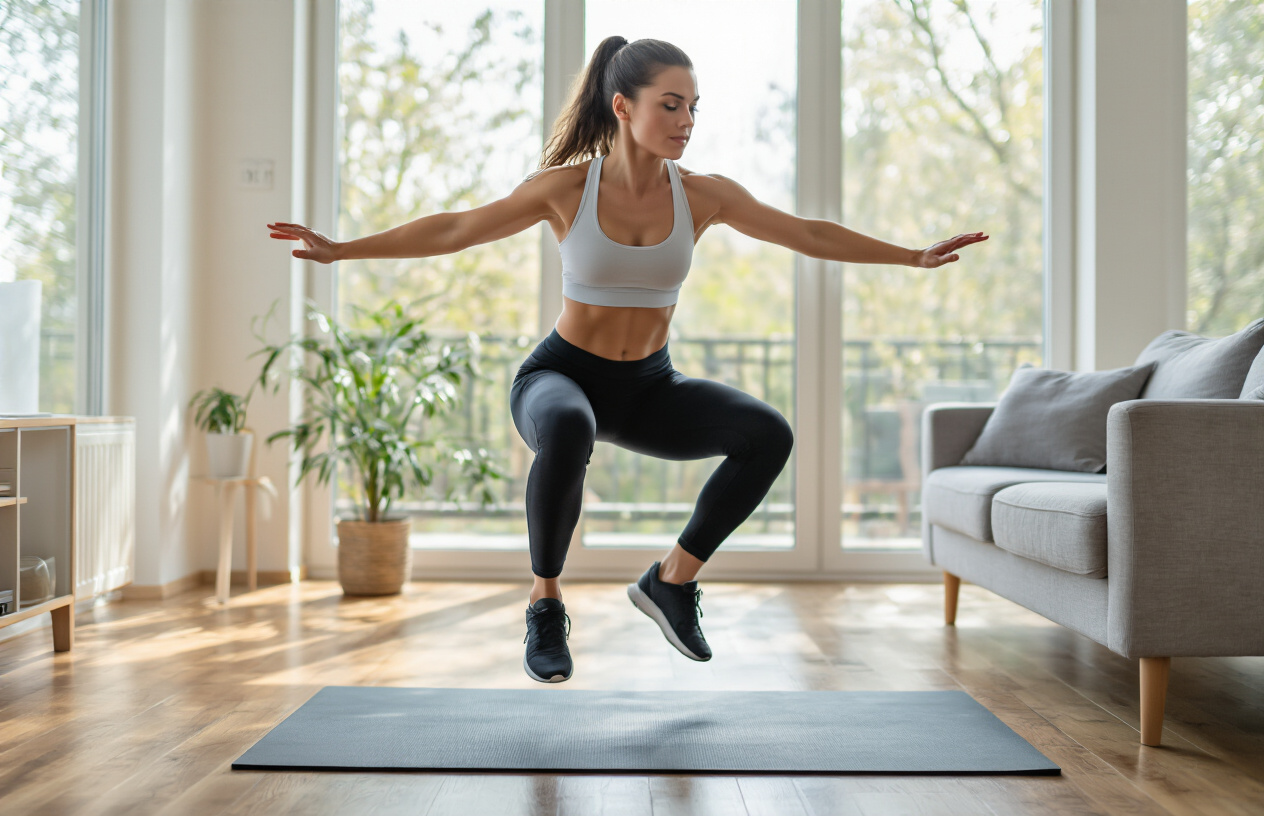
Bodyweight squats form the foundation of any serious lower body routine, targeting your quadriceps, glutes, hamstrings, and calves in one fluid movement. The beauty lies in their simplicity - no equipment needed, yet the muscle-building potential remains enormous.
Start with your feet shoulder-width apart, toes pointing slightly outward. Keep your chest up and core engaged as you lower down by pushing your hips back and bending your knees. Imagine sitting back into an invisible chair. Your thighs should reach parallel to the floor before driving through your heels to return to standing.
Progressive Variations for Continued Growth:
-
Pulse squats: Hold the bottom position and pulse up and down
-
Jump squats: Add explosive power by jumping at the top
-
Single-leg pistol squats: Advanced unilateral strength builder
-
Slow-tempo squats: 3-second descent, 2-second pause, 1-second ascent
Common mistakes include allowing knees to cave inward, rising onto toes, or not reaching proper depth. Focus on keeping knees tracking over toes and maintaining weight distributed across your entire foot.
Lunges for Functional Leg Strength
Lunges excel at building real-world strength because they mimic natural movement patterns we use daily - climbing stairs, getting up from low positions, or stepping over obstacles. This unilateral exercise forces each leg to work independently, correcting muscle imbalances that often develop from bilateral movements.
Begin standing tall, then step forward with one leg, lowering your hips until both knees bend at roughly 90 degrees. Your front knee should stay directly above your ankle, never pushing past your toes. The rear knee hovers just above the ground. Push through your front heel to return to starting position.
Lunge Variations to Master:
-
Reverse lunges: Step backward instead of forward (easier on knees)
-
Walking lunges: Continuous forward motion
-
Lateral lunges: Step out to the side for inner thigh activation
-
Clock lunges: Step in different directions like clock positions
The key difference between lunges and squats? Lunges challenge your balance and coordination while working legs through different planes of motion. This translates directly to better athletic performance and everyday functionality.
Glute Bridges for Posterior Chain Activation
Your posterior chain - glutes, hamstrings, and lower back - often gets neglected in our sit-heavy society. Glute bridges specifically wake up these sleeping muscles, creating a strong foundation for all other lower body movements while improving posture and reducing back pain.
Lie on your back with knees bent, feet flat on the floor hip-width apart. Squeeze your glutes and drive your hips upward, creating a straight line from knees to shoulders. Hold briefly at the top before lowering with control.
Advanced Bridge Progressions:
-
Single-leg bridges: Double the challenge by lifting one foot
-
Bridge holds: Maintain top position for 30-60 seconds
-
Bridge marches: Alternate lifting each foot while holding bridge position
-
Elevated bridges: Place feet on couch or step for increased range
The mind-muscle connection proves critical here. Really focus on squeezing your glutes at the top rather than just going through the motions. Many people compensate by overusing their hamstrings or arching their lower back excessively. Think about tilting your pelvis slightly upward to maximize glute engagement while protecting your spine.
Full Body Cardio Burners
Burpees for maximum calorie burn
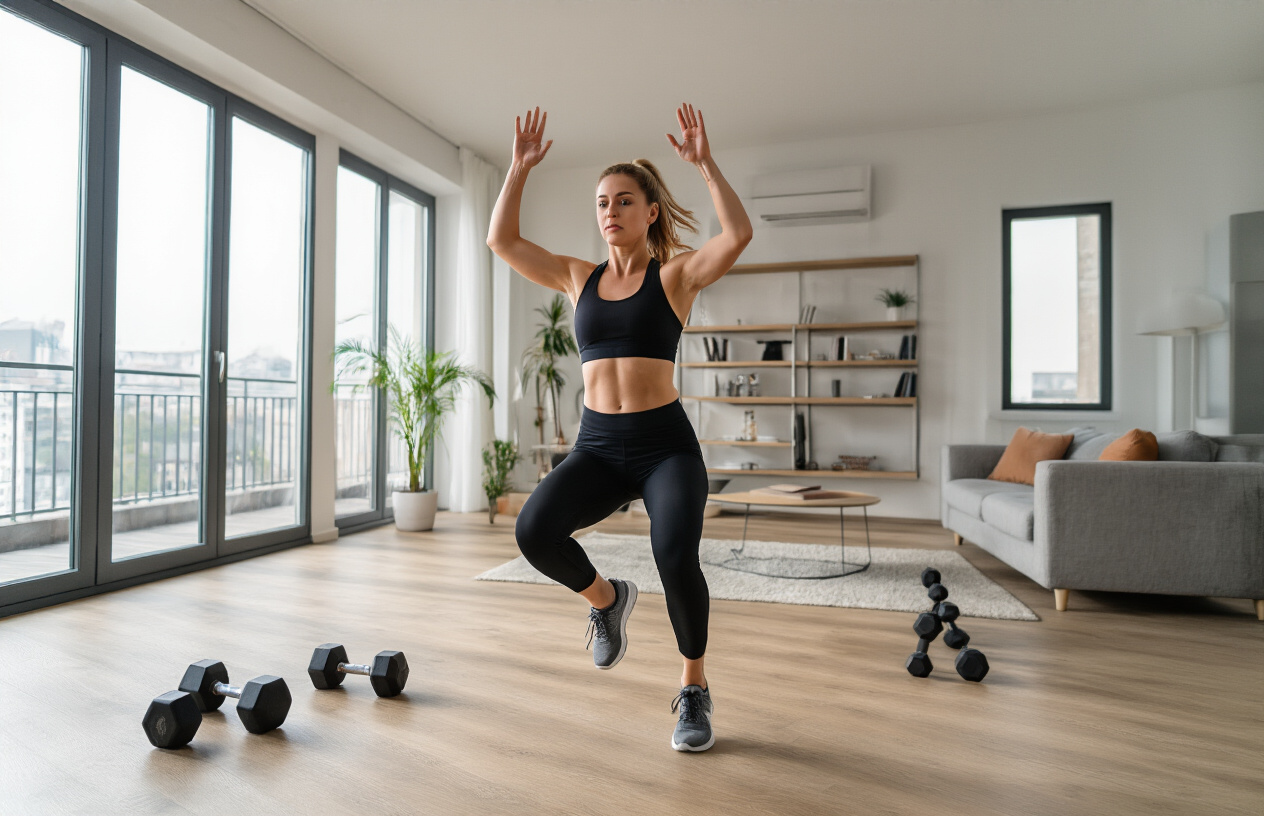
Burpees stand as the undisputed champion of full-body fat burning exercises. This powerhouse movement combines a squat, plank, push-up, and explosive jump into one fluid motion that torches calories at an incredible rate. What makes burpees so effective is their ability to engage every major muscle group while spiking your heart rate within seconds.
The exercise starts from a standing position, drops into a squat with hands on the floor, kicks back into a plank position, performs a push-up, jumps feet back to squat, and explodes upward with arms overhead. This sequence creates an intense metabolic demand that continues burning calories long after your workout ends.
For beginners, modify by stepping back into the plank instead of jumping, or eliminate the push-up component. Advanced practitioners can add variations like burpee box jumps or single-arm burpees to increase difficulty. The key is maintaining proper form throughout each repetition to maximize effectiveness and prevent injury.
Jumping jacks for cardiovascular health
Jumping jacks offer an accessible entry point into cardiovascular conditioning that delivers impressive results. This classic exercise elevates heart rate quickly while improving coordination and rhythm. The synchronized arm and leg movements create a full-body activation pattern that strengthens the cardiovascular system and enhances overall endurance.
The beauty of jumping jacks lies in their simplicity and scalability. Start with feet together and arms at sides, then simultaneously jump feet apart while raising arms overhead, returning to starting position with control. This basic pattern can be modified for any fitness level by adjusting speed, range of motion, or adding variations like star jumps or cross-body jacks.
Regular jumping jack practice improves bone density, particularly in the legs and spine, while enhancing balance and proprioception. The low-impact nature makes them suitable for most people, though those with joint issues can perform modified versions by stepping side to side instead of jumping.
High knees for leg endurance
High knees transform running in place into a powerful endurance builder that targets the entire lower body. This dynamic movement emphasizes hip flexor strength, quadriceps endurance, and core stability while providing excellent cardiovascular conditioning. The rapid knee-to-chest motion mimics sprinting mechanics, making it valuable for athletes and fitness enthusiasts alike.
Proper execution involves driving knees toward chest level while maintaining an upright posture and engaging the core. Arms pump naturally in opposition to leg movement, creating additional upper body involvement. Focus on quick, light foot strikes and controlled breathing to maintain intensity throughout the exercise period.
Progress by increasing duration, adding arm variations, or incorporating high knee runs across longer distances. The exercise builds explosive power in the legs while improving running form and efficiency. Regular practice develops the fast-twitch muscle fibers essential for athletic performance and daily activities requiring quick movements.
Flexibility and Mobility Enhancers
Cat-Cow Stretches for Spinal Health
Cat-cow stretches work wonders for your spine, especially if you spend hours hunched over a desk or phone. This gentle flowing movement helps decompress your vertebrae while improving flexibility throughout your entire back. Start on your hands and knees with wrists directly under shoulders and knees under hips. For the cow pose, drop your belly toward the floor while lifting your chest and tailbone toward the ceiling. Your back should create a gentle arch. Hold for 2-3 seconds, then transition into cat pose by rounding your spine toward the ceiling, tucking your chin to chest, and drawing your belly button in.
The magic happens in the slow, controlled movement between these two positions. Repeat 8-12 times, focusing on each vertebra moving individually rather than just bending at your lower back. This exercise increases spinal mobility, reduces stiffness, and can help alleviate lower back pain. Many people notice improved posture after just a few weeks of daily practice.
Hip Circles for Joint Mobility
Your hips carry you through life, but tight hip joints can limit your movement and cause compensation patterns that lead to pain elsewhere. Hip circles address this by moving your hip joint through its full range of motion in all directions. Stand with feet hip-width apart and hands on your hips for stability. Lift one knee to hip height, then slowly circle that leg outward, back, and around in a smooth motion.
Start with 5-8 circles in each direction per leg, gradually increasing as your mobility improves. You can modify this by holding onto a wall or chair for balance, or perform smaller circles if you're just starting out. The key is maintaining control throughout the entire movement rather than just swinging your leg around. This exercise helps maintain healthy hip joint function, reduces stiffness from sitting, and can prevent future mobility issues.
Arm Swings for Shoulder Flexibility
Shoulder stiffness plagues many people, especially those who work at computers or carry stress in their upper body. Arm swings provide dynamic stretching that warms up your shoulder joints while improving range of motion. Stand tall with arms at your sides, then begin swinging both arms forward and backward in large circles. Keep the movement controlled and gradually increase the size of your circles.
You can also perform cross-body arm swings by bringing one arm across your chest, then swinging it out to the side and back. Try 10-15 swings in each direction, focusing on smooth, fluid movement. This exercise helps counteract rounded shoulders, improves circulation to your shoulder muscles, and prepares your upper body for other activities. Regular arm swings can significantly reduce shoulder tension and improve your overall posture.
Leg Swings for Dynamic Warm-Up
Leg swings serve as an excellent dynamic warm-up that prepares your legs for activity while improving hip flexibility and balance. Stand next to a wall or sturdy surface for support, then swing one leg forward and backward like a pendulum. Keep your torso upright and let momentum carry your leg naturally. Start with smaller swings and gradually increase the range as your muscles warm up.
After front-to-back swings, switch to side-to-side movements, swinging your leg across your body and then out to the side. Perform 10-12 swings in each direction before switching legs. This exercise activates your hip flexors, hamstrings, and glutes while improving coordination and balance. Athletes use leg swings before training because they effectively prepare the body for movement while reducing injury risk. The dynamic nature makes them perfect for warming up before any physical activity.
Equipment-Free Modifications
Regression Options for Beginners
Starting your fitness journey can feel overwhelming, but every exercise can be scaled down to match your current ability level. Push-ups giving you trouble? Drop to your knees or place your hands on an elevated surface like a couch or coffee table. The higher your hands, the easier the movement becomes. Wall push-ups are perfect for absolute beginners – just stand arm's length from a wall and push against it.
Squats can be modified by using a chair for support or only going halfway down until you build strength. Planks become manageable when you hold them for just 10-15 seconds at a time, or perform them on your knees instead of your toes. Mountain climbers can slow down to a walking pace, focusing on proper form rather than speed.
The key is listening to your body and gradually building up. Start with shorter time periods, fewer repetitions, and simpler movement patterns. Your muscles need time to adapt, and there's no shame in taking it slow.
Advanced Progressions for Experienced Exercisers
Once regular exercises become too easy, it's time to level up without buying equipment. Single-arm push-ups, pistol squats, and handstand push-ups against a wall will challenge even the fittest individuals. Add explosive movements like jump squats, burpee variations, or plyometric push-ups to increase intensity.
Time-based challenges work wonders too. Try holding a plank for three minutes, performing 100 burpees for time, or creating circuit combinations that keep your heart rate elevated. Unilateral exercises (single-limb movements) force your body to work harder for stability and balance.
Combine exercises into flowing sequences – move from a push-up directly into a mountain climber, then to a burpee. These compound movements demand more energy and coordination, giving you a serious workout without any gear.
Space-Saving Exercise Alternatives
Living in a small apartment doesn't mean sacrificing your workout. Focus on exercises that require minimal floor space – about the size of a yoga mat. High knees, jumping jacks in place, and stationary exercises like planks and push-ups work perfectly in tight quarters.
Vertical movements are your friend. Wall sits use wall space instead of floor space, while calf raises can be done anywhere you can stand. Isometric holds like wall planks or invisible chair sits require zero equipment and minimal room.
Consider exercises you can do on your bed or couch – tricep dips, incline push-ups, or step-ups using a sturdy chair. These furniture-based modifications turn your living space into a functional gym without rearranging everything or disturbing neighbors below.
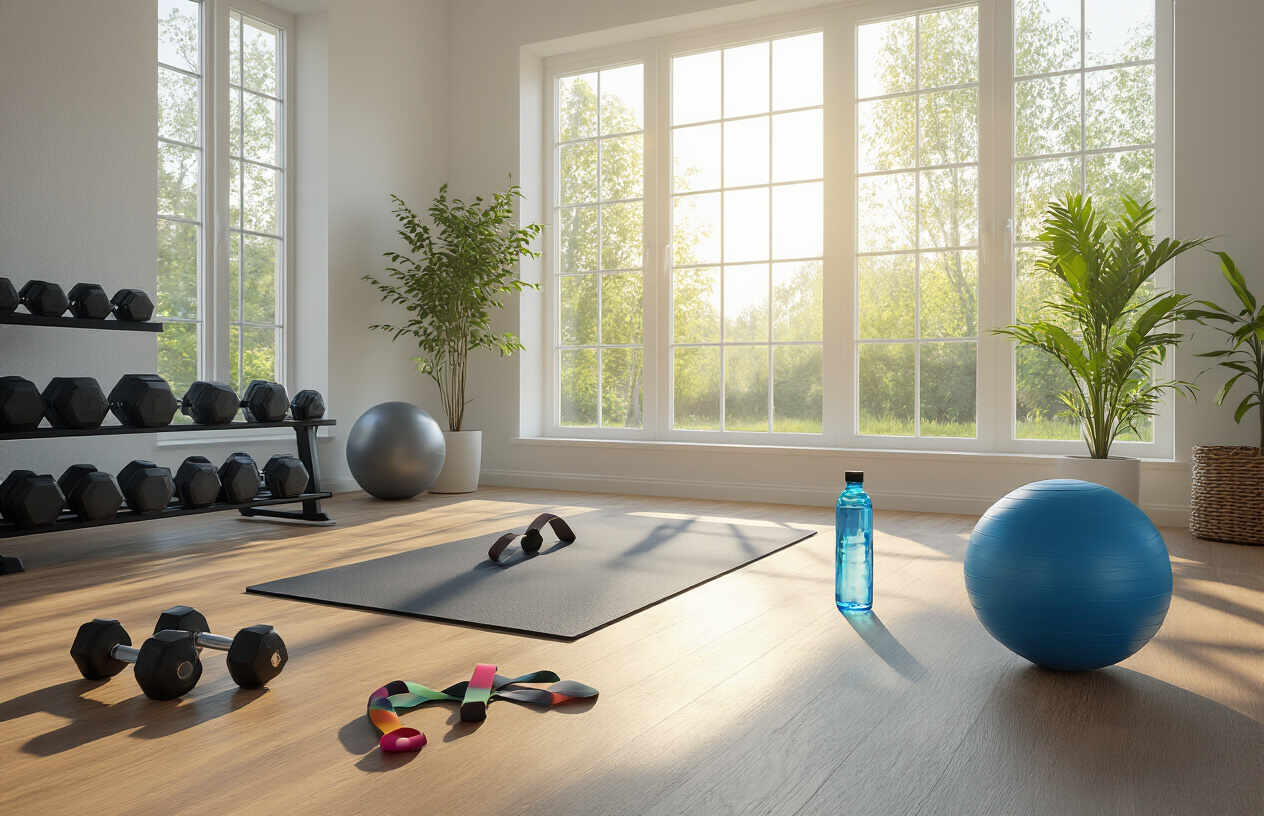
Getting fit at home doesn't have to be complicated or expensive. The exercises we've covered give you everything you need to build a strong upper body, powerful legs, a solid core, and better cardiovascular health right in your living room. From push-ups and squats to planks and jumping jacks, these moves work together to create a complete fitness routine that fits any schedule or fitness level.
Start with just a few exercises that feel comfortable and gradually add more as you get stronger. The best part about home workouts is that you can modify everything to match your current abilities and goals. Your body is the only equipment you really need, so there's no excuse not to get moving. Pick three or four exercises from our list, do them for 15-20 minutes today, and see how good it feels to take control of your fitness journey.
Comments
Post a Comment